
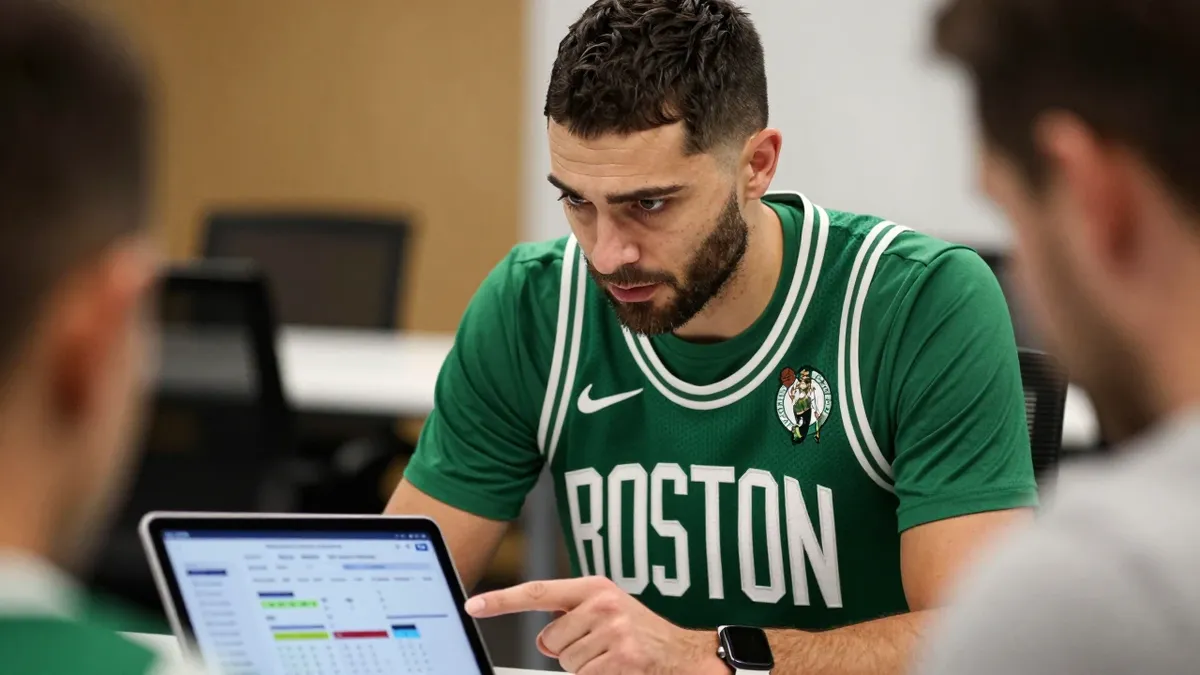
The Boston Celtics are constructing a roster designed to minimize the role of luck in NBA outcomes, according to analysis from the 'Hot Hand theory' YouTube channel. This strategic build, led by President of Basketball Operations Brad Stevens, focuses on specific, controllable elements of the game as the team looks ahead to the 2026-27 regular season.
How are the Boston Celtics reducing luck in their game?
The core philosophy involves maximizing head coach Joe Mazzulla's evolving tactics. The system is built on four pillars: prolific three-point shooting, aggressive offensive rebounding, forcing opponent turnovers, and winning the possession battle. By dominating these statistical areas, the Celtics aim to create more scoring opportunities and limit their opponents' chances, making game results less dependent on random, hot shooting nights.
Analysts from the channel examined how individual players fit this model. They took a closer look at Jayson Tatum and Paul George, assessing how their skills in perimeter shooting and defensive pressure contribute to the system. The presence of a player like Mitchell Robinson is also key for securing those second-chance points off the offensive glass. You can track the team's progress in these key areas on our stats page throughout the season.
What does this mean for the Celtics' 2026-27 season?
This approach represents a long-term vision for sustainable success. Instead of hoping for lucky bounces or opponent mistakes, the Celtics are building a team that consistently generates high-value shots and extra possessions. It's a data-driven method to basketball that values process over unpredictable outcomes. The strategy will be tested heavily during the upcoming NBA playoffs, where every possession is magnified.
Implementing this requires players who excel in specific, measurable roles. It's not just about star power but about finding the right pieces that complement the system. The front office's job is to acquire and retain talent that thrives in this environment, ensuring the team's style of play remains consistent from game to game.
How do recent results factor into this analysis?
Even with a sound strategic foundation, execution on the court against elite competition is everything. Games are won by making shots, getting stops, and securing rebounds, not by theory alone.
So the coming season will be a major test. Can a roster built to limit variance actually produce more consistent wins? The answer will depend on player health, in-game adjustments by Mazzulla, and how well the team's stars like Tatum buy into and execute the system night after night. Fans can follow the team's upcoming schedule and see how this strategy unfolds on our schedule page.
The 'Hot Hand theory' clip suggests Boston is on the right track. By controlling what they can and minimizing elements left to chance, the Celtics are trying to engineer a championship contender. It's a modern approach to team building that could redefine how front offices construct rosters in the future.